
“Press any button to start”
Curious, isn’t it? How video games can transport us into virtual worlds of limitless possibilities – from medieval kingdoms to dystopian cities in the far distant future. How we can get lost in the stories of characters we can identify with and whose destiny is dictated by us, the players.
As the stigma surrounding mental health began to dissipate, various mental illnesses became a recurring theme in video games. So I have selected 6 games that tackle this topic in an innovative way and, above all, have managed to make me better understand what I am going through. From compelling stories about friendship or love to difficult challenges and important narrative choices, I’m sure that all the games I will be talking about below will give you a unique perspective on mental health:
1. Sky – Children of Light
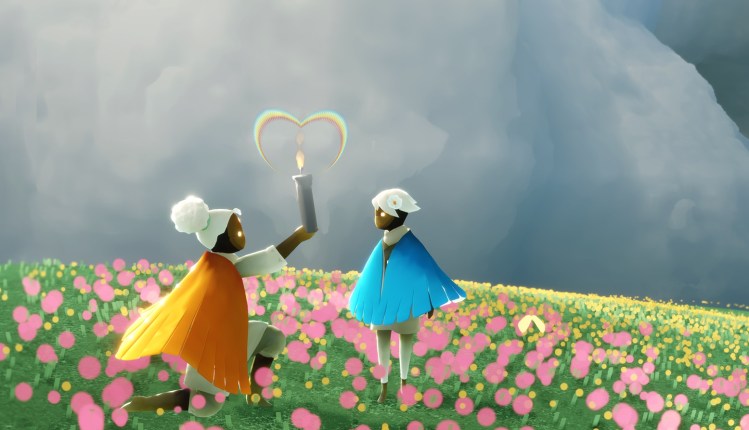
Can we find beauty in helping those around us?
Sky-Children of the Light, developed by thatgamecompany, aims to answer this question.
Confused, you wake up in an abandoned world, plunged in a deep darkness that only you still haunt. Although the solitude can be intimidating at first, the game will quickly explain that in this vast “open world” you can meet other players. You can join them on an adventure to find the long-lost light of this land.
What makes the game really special is the innovative gameplay loop, where the mini-stories and friendships you can form with other players, together with the dynamic music and game space, represent different stages of life and the human experience.
By immersing yourself in “Sky-Children of the Light” you can detach yourself from the daily routine of everyday life, from stress, fears, frustrations, and enter a world where all that matters is to seek, together with other people, the good and happiness.
2. Gris
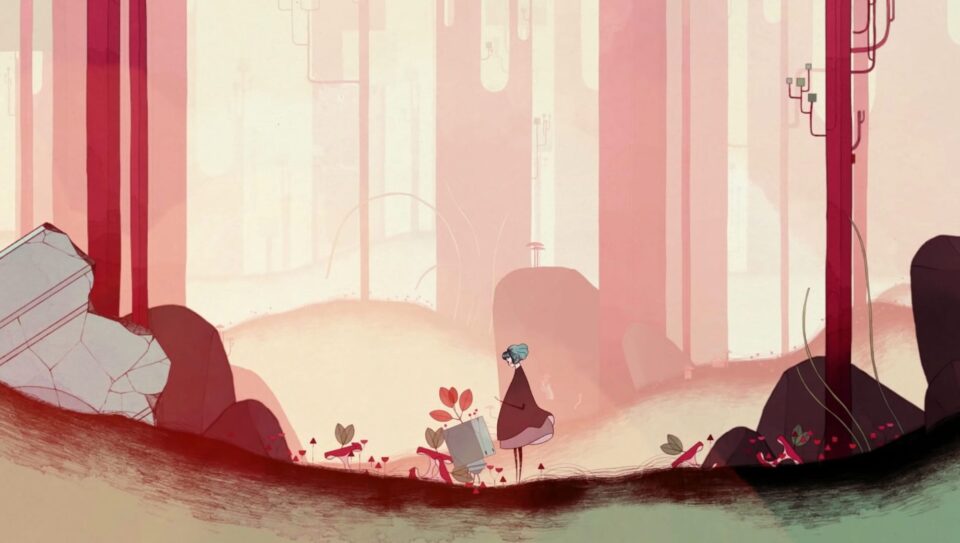
A story told through colour.
Gris begins with one of the most impressive sequences I have encountered in a video game: the artwork and sound design are masterfully interwoven to convey the happiness felt by the protagonist. Within seconds, however, Gris’s world falls apart, and she is left alone. The vivid colours from the beginning are replaced by a monotonous black and white, reflecting the trauma experienced by the character.
As the story develops, the colour palette becomes richer, portraying the inner turmoil that Gris is experiencing. In this way, the game uses its exceptional artwork to illustrate the 5 stages of grief. The first level focuses on the first stage – denial, followed by anger, imagined as a red, almost infinite desert. Gris’s behaviour becomes erratic, and she ends up destroying everything in her path. Once she reaches the end of the desert, however, a new realm opens up before Gris – bargaining. In the third level, the setting changes to a magical forest, where green is the predominant colour. Traces of reddish hues can still be observed, suggesting that the stages of grief are not always linear and perfectly separable. From this point, Gris’s destiny continues on some unexpected paths, which I invite you to explore to find out how the last two stages of grief appear and what other characters join Gris’s journey.
From a gameplay perspective, Gris is a sidescroller with puzzle elements. Although the riddles Gris must solve are quite easy at first, the difficulty increases as you advance in the game. I, at least, got stuck in several sections and found several quite complex puzzles with “outside the box” solutions.
The story remains, however, the most memorable aspect of the game. Through a series of emotions of loss, sadness, regret, anger, but also love and inner rediscovery, we learn that, no matter how alone we might feel, there is always a path towards hope.
3. Celeste

“This mountain might be a bit much for you.”
Celeste begins by telling the player that they probably won’t finish the main mission. It’s unusual for a game to start by discouraging the player, but it’s a fitting sequence when we consider the story Celeste is trying to tell. Madeleine, a trans teenager, begins a spiritual journey of self-discovery, attempting to climb to the top of Celeste Mountain – one of the highest and most dangerous in the whole world.
The game tells its story through the high (and sometimes frustrating) difficulty of the “parkour” levels, which reflect the intensity of Madeleine’s struggle with anxiety disorder and low self-esteem. Throughout the game, we witness the inner development of the character, who gains more strength and makes peace with herself, helped by those she meets on her way. Without entering spoiler territory, I can say that, by the end, there’s a good chance you’ll shed a few tears.
Returning to the actual gameplay, the platforming mechanics are fluid and intuitive: it’s pleasant to control Madeleine, and the game interface helps you understand what your objectives are and what you can do in each level. The level design is also fantastic, incorporating many creative ideas to gradually increase the difficulty, and the soundtrack perfectly complements Madeleine’s journey. Although Celeste is considered one of the hardest video games, there are many accessibility options available, so that each player can adapt the experience to their liking.
All in all, Celeste is one of the best games I’ve played, both due to the platforming which remains fun and difficult throughout the game, and the moving narrative thread that manages to present the inner struggle of a transgender character with anxiety disorders and depression.
4. Night in the Woods
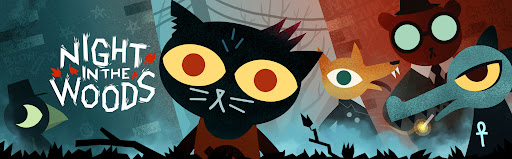
“Nothing is going to save us forever. But a lot of things can save us today”
Of all the games mentioned so far, I believe that Night in the Woods (developed by Infinite Fall) comes with the best portrayal of mental disorders – even if the gameplay is not the most interesting, the story and the characters you will meet along the way manage to make the game memorable.
Following a traumatic event, Mae the Cat finds herself forced to return to her hometown. Here she reunites with all her teenage friends and resumes all the activities that once made her happy. Soon, however, the player realises that Mae’s life is lived in the shadow of depression and anxiety, marked by feelings of isolation and loneliness. The characters around her are also affected by toxic relationships, abusive families, and discrimination. Thus, the narrative thread reveals to players how common mental disorders are, as well as the way they systematically affect our daily lives.
As the story evolves, the characters are forced to help each other to cope with difficulties. In this way, the game emphasises the importance of emotional support in day-to-day challenges. Towards the end, the game also brings to the fore the different ways in which characters try to avoid confronting the mental illnesses they suffer from – another type of behaviour often encountered in reality.
Night in the Woods has stayed with me for its harsh but very true-to-life portrayal of lives affected by mental disorders, and I easily recommend it to anyone who wishes to have a deeper understanding of these conditions.
5. Life is Strange
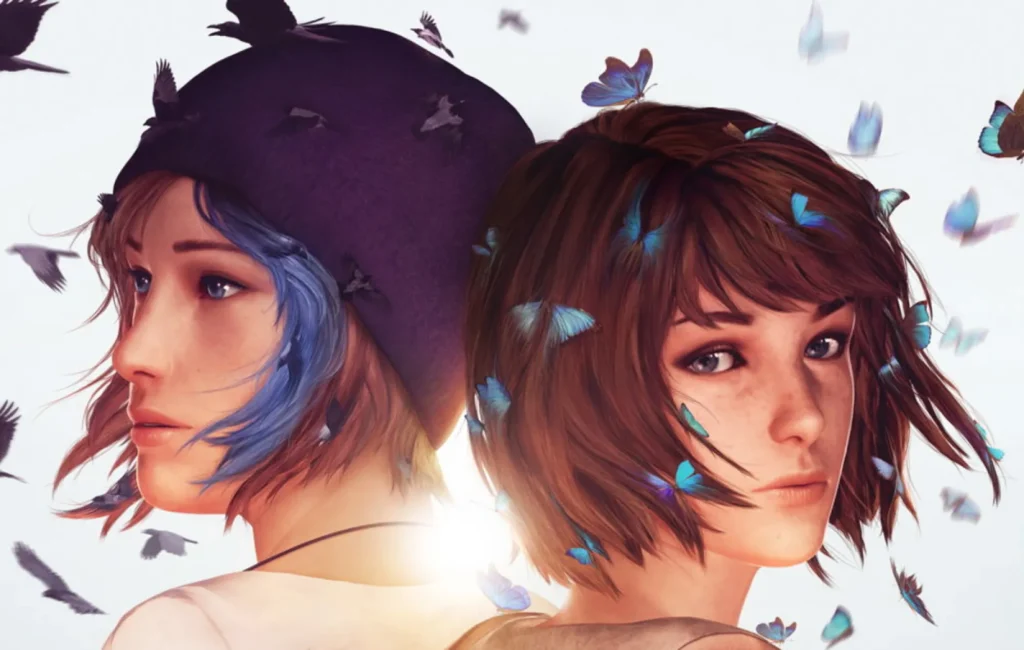
“Sometimes when you meet someone who’s going to change your life… You just know it, I guess.”
Life is Strange is a game about choices. From trivial choices, between what to eat for lunch or who to spend your free time with after high school, to choices that can change the course of humanity. Thus, the game by the Dontnod Entertainment team distinguishes itself through the player’s ability to influence the events of the story, dictating the choices of the protagonist, Max.
As in Night in the Woods, Max returns to her hometown, where she reconnects with her best childhood friend, Chloe, who however dies shortly after. Following this traumatic event, Max gains the power to turn back time to save her friend.
An impressive story follows, full of supernatural elements, in which Max must find out more about her friend’s past to save her life. This is where the main mechanic comes in: Max’s choices, which can help Chloe manage depression and anxiety.
The friendship between the two teenagers is developed throughout the story, and I remained captivated by the characters and Max’s journey. What struck me most is the way the game approaches the theme of mental health – people who suffer in solitude from depression or anxiety are portrayed with compassion, and players are encouraged to discover the importance of friendship and how they can offer support to loved ones in crisis situations.
6. Depression Quest
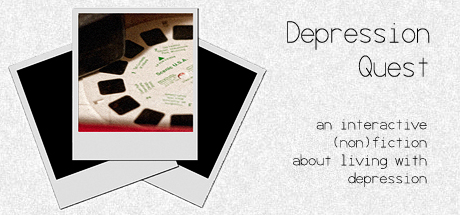
We all know what depression is, right?
I would say not. Depression has certainly become a buzzword that most people can recognise, but few know exactly what this disorder consists of.
Depression Quest is a browser game that aims to raise awareness on the topic of mental disorders and simulate the experiences of an ordinary person suffering from depression.
As a player, you will receive a summary every day about the character’s mental state, along with what activities you have undertaken during the day and what decisions you have to make in the future. Some decisions or dialogue options are inaccessible, to illustrate how depression or social anxiety can paralyse you in the face of apparently trivial situations and can affect your functionality in daily life.
The game illustrates how difficult it is to face these disorders daily, but it also reminds you that most of the time you are not alone and there is hope, even if at the moment it seems impossible to believe this.
.
That was quite a list! All the games I’ve talked about are exceptional, using fictional worlds with captivating stories and complex mechanics to shed light on the struggle with the most common mental disorders. Stepping into the shoes of 6 characters facing such conditions, I was left at the end of the day with the idea that I don’t have to face them alone, and I feel more comfortable asking for help. I hope they resonate with you in a similar way.
.
We thank the community on our Discord server for the recommendations! If you have played other games in which themes related to mental health appear, or which have helped you get through more difficult moments, you can write to us by email or social media and we will add them to the list of recommendations.


