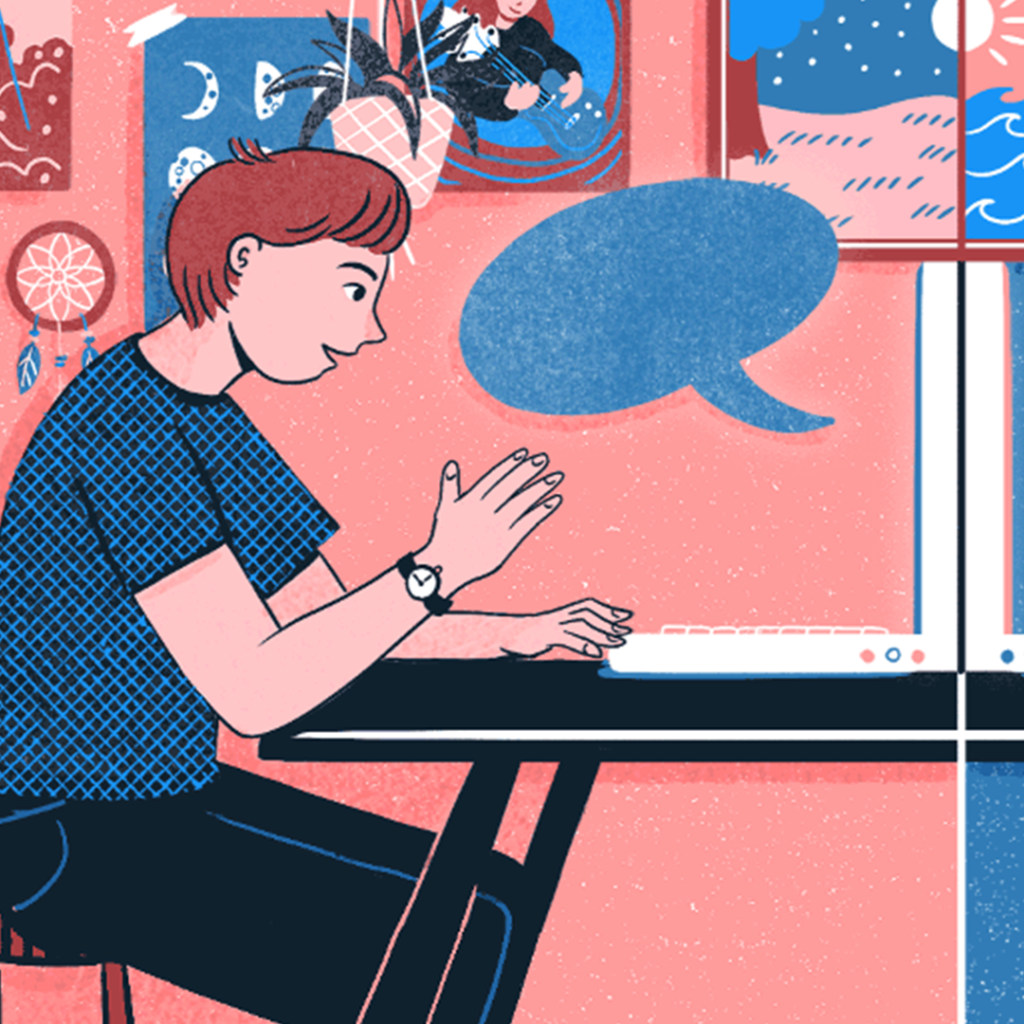
How did the therapeutic process and the intimacy between patient and psychologist change during the pandemic?
During the pandemic, therapists moved all office sessions online, on Skype or WhatsApp Video. So patients either continued with online sessions or dropped out. We asked psychologists how privacy in the therapeutic process is being changed by moving sessions online and whether the relationship between patient and specialist is suffering.
Online therapy sessions are an integrated part of all the resources that a therapist can routinely offer in therapy. There were patients who even before the pandemic preferred to hold sessions in this way (those who had gone abroad and found it easier to open up to a Romanian therapist or patients who could not come to the office).
An online session is conducted via Skype or WhatsApp Video. Just as in the office, the therapist becomes responsible for creating the right emotional space for each individual patient and making them feel comfortable. As sessions now take place on these online platforms, therapists say patients are more reluctant to continue or start therapy.
The difficulties lie in the fact that in some cases patients feel uncomfortable talking in front of a screen, or therapists feel it is hard to maintain the atmosphere of the session or achieve a certain intimacy (especially if internet connection difficulties arise). “Perhaps the therapeutic relationship develops a little more slowly online than at the office,” says Ana Maria Dobre, psychologist and counsellor. “You have to think a bit beforehand, to make yourself comfortable with the situation. When you go to the office, you see the office, you see the place where the person practises, and perhaps it gives you a sense of professionalism, of safety. Whereas, if you are online, you see nothing but a blank wall.”
Also, what is missing in the online environment is physical proximity. Therapists say it is more difficult to analyse body language, which can help them better understand how sensitive a certain topic is for the patient. Ana-Maria Ioniță, a psychologist specialising in experiential therapy (based on experiencing emotion and the “here and now” experience, which allows the person to become aware of their own thinking through role-play, metaphors, stories, and various forms of art), does not believe that intimacy is at the same level as in office sessions and says that ideally a therapeutic relationship should already exist between the psychologist and the client for online sessions to work. “It seems to me that in this online version you cannot do psychotherapy. Perhaps counselling on a very specific issue or with clients you have already worked with for a long time and a relationship is already formed. I don’t think you can work deeply on certain traumas.”
Nevertheless, online therapy can be an alternative during this period to continue the therapeutic process in which patients have invested energy, time, and financial resources. Online therapy works differently for each individual patient and can yield results depending on the flexibility of both the therapist and the patient (if the patient is involved in the sessions, vulnerable, trusts their therapist, and is willing to work on themselves, then results will continue to appear).
© Verywell mind
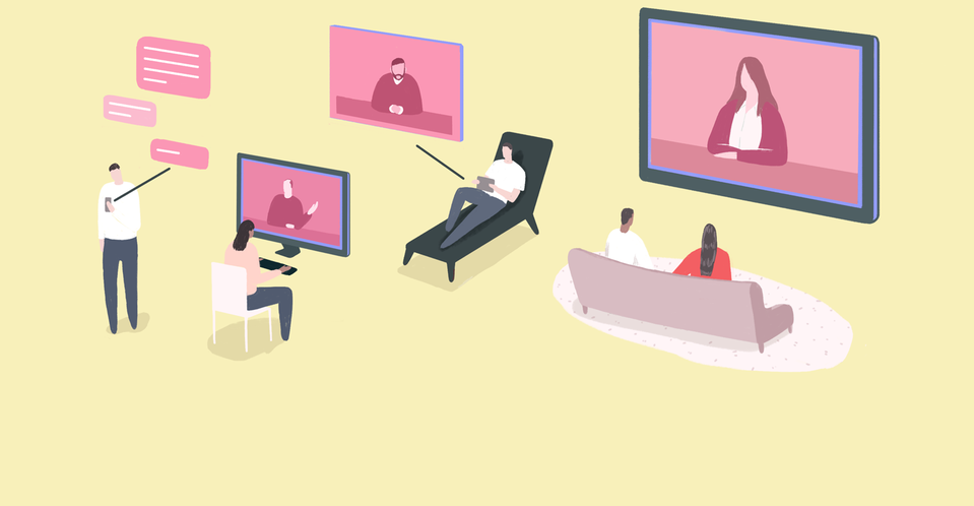
As the space the patient is in is one of emotional safety for them (their room, a place in the house where they feel comfortable), the sessions maintain their intimacy: “From what I have experienced these weeks, [patients] have been able to bring to the fore the difficulties they had even before now. This situation has not been a hindrance to sharing what they are facing, beyond what coronavirus means, so I don’t feel that intimacy has been altered,” says Andrada Cosma.
The online environment also offers other tools that psychologists can use: articles, studies, or online questionnaires, or explanatory videos or techniques that can work just as they do in the office. “As long as you are a flexible therapist, you can reach people through other ways as well. I, for example, sometimes tell them that we can hear each other through messages or voice notes. Sometimes they write, I reply vocally – because there is a larger amount of information I can convey,” adds Andrada Cosma.
Regarding various exercises or techniques they worked on in the office, psychologists say these can be adjusted and brought online. An example would be schema therapy, which has an exercise called chairwork, a sort of exercise with chairs, where the person enters different defensive modes, and when they change mode, they have to get up from the chair and move to another place. “Solutions can be found like – moving from the spot on the sofa where they sit at home to another spot, or just making the switch, not necessarily moving. Solutions can be found. Online I also show short films, all sorts of exercises, we discuss articles. I make use of this part and I find it works very well,” adds Ana Maria Dobre.
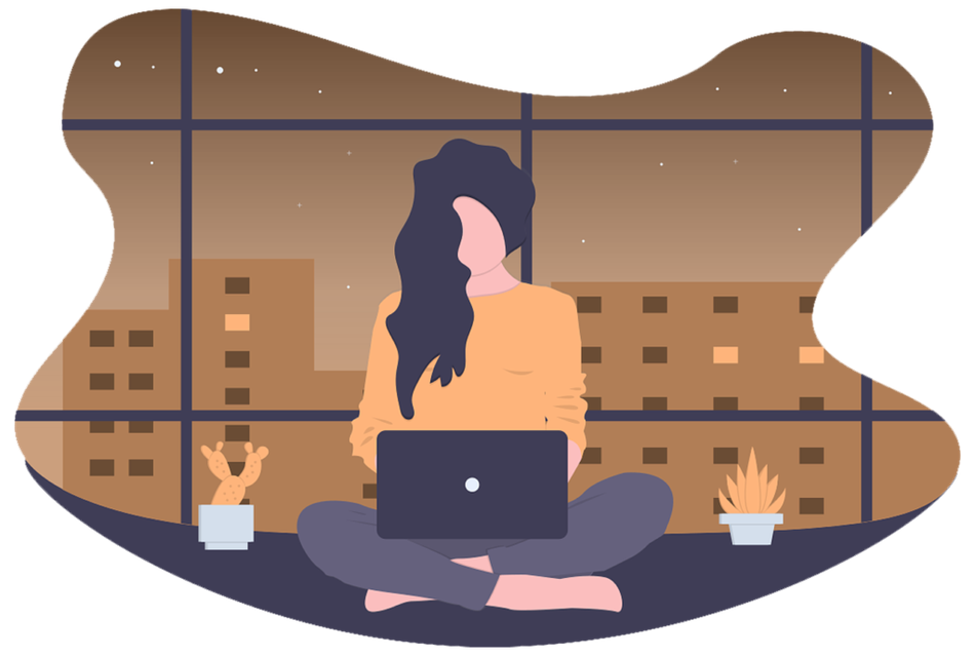
Oana Ungureanu started doing online therapy three weeks ago. Every Tuesday, she takes her laptop in her arms, sits on the bed, and starts the therapy session via Skype. As she lives in a house and has her room upstairs, she asked her parents and sister not to come up at all during the session to enjoy her privacy. When she was asked by her therapist if she wanted to move the sessions online, she thought it would be a safe option for her, so as not to stop the therapeutic process, especially since the journey to therapy involved the bus and the metro. Therapy was a natural thing for her, part of her routine, just as going to university or eating was.
© healthfulmind
The first session was intimidating. She thought it was a new platform and it seemed different to interact online or on the phone compared to office sessions. “In the end, I adapted quite quickly. This online context helps me because I think I can distance myself at any time if something doesn’t seem okay or if a certain state is triggered. I simply close the laptop and leave.”
She talks about the things they discussed before: thoughts she notes in her journal until the time of the session and which she would like to share, about how she feels on that day, or about things that cause her discomfort. During this period, they also talked about how her life has changed in pandemic times: what it’s like to be stuck in the house with her family, how to stay motivated, and how to better manage her moods.
“It seems more intimate to me because it’s in my personal space, it’s in my room, the cat also makes an appearance. Perhaps it’s not the same degree of intimacy as physical proximity was, but on the other hand, the fact that I’m in my space, that my things appear, helps me a lot.”
At the same time, she feels there are more distractions: sometimes her cat, the family, the dogs in the neighbourhood, which she feels disturb her session.
Oana tells everything she feels during the sessions, she doesn’t feel reluctant to talk to the therapist, especially since she trusts her and they have built a therapeutic relationship over two years. During this period, Oana is working a lot on introspection. She thinks about the things that make her happy and how she can adapt and get used to the context of the pandemic better. She tries to focus on things that have a conclusion, to let herself feel the uncertainty and analyse it, to see what makes her feel uncomfortable.
Also during this period, she is focusing on guided mindfulness exercises. “I listen to how the therapist’s voice guides me. Some [exercises] have me focus on surrounding noises, others on surfaces and the body. And the idea of the exercises, regardless of form, is to keep me mindful, to stay aware of what I am doing, to try not to think about other things,” says Oana. “I think sometimes I concentrate more easily at home, because it’s my space and I feel more relaxed. And my body feels safer.”
Online therapy can work during this period if the therapists and patients involved in the process are flexible and replace some traditional techniques with new ones: “I think if you are in a moment of distress, many rules we have in our minds about how things should be fall away,” adds Andrada Cosma. “What matters there is having someone with whom you feel emotionally safe.”
Thus, according to specialists, online therapy can be an alternative to continuing the therapeutic process during the pandemic because the patient does not interrupt the therapeutic progress made until then and continues their healing (in which they invested even before the pandemic) and can hold sessions in a familiar space (their room or a comfortable place for them). Also, anonymity is preserved (for some people for whom it was uncomfortable to get to the office and stay in the waiting room where they would meet other patients) as well as the intimacy of the office (if they have a room dedicated to the sessions, where the patient is alone).
.
.
For more details about clinics in Romania offering free or discounted services online: https://mentalhealthforromania.org/serviciu/harta-specialistilor/.


